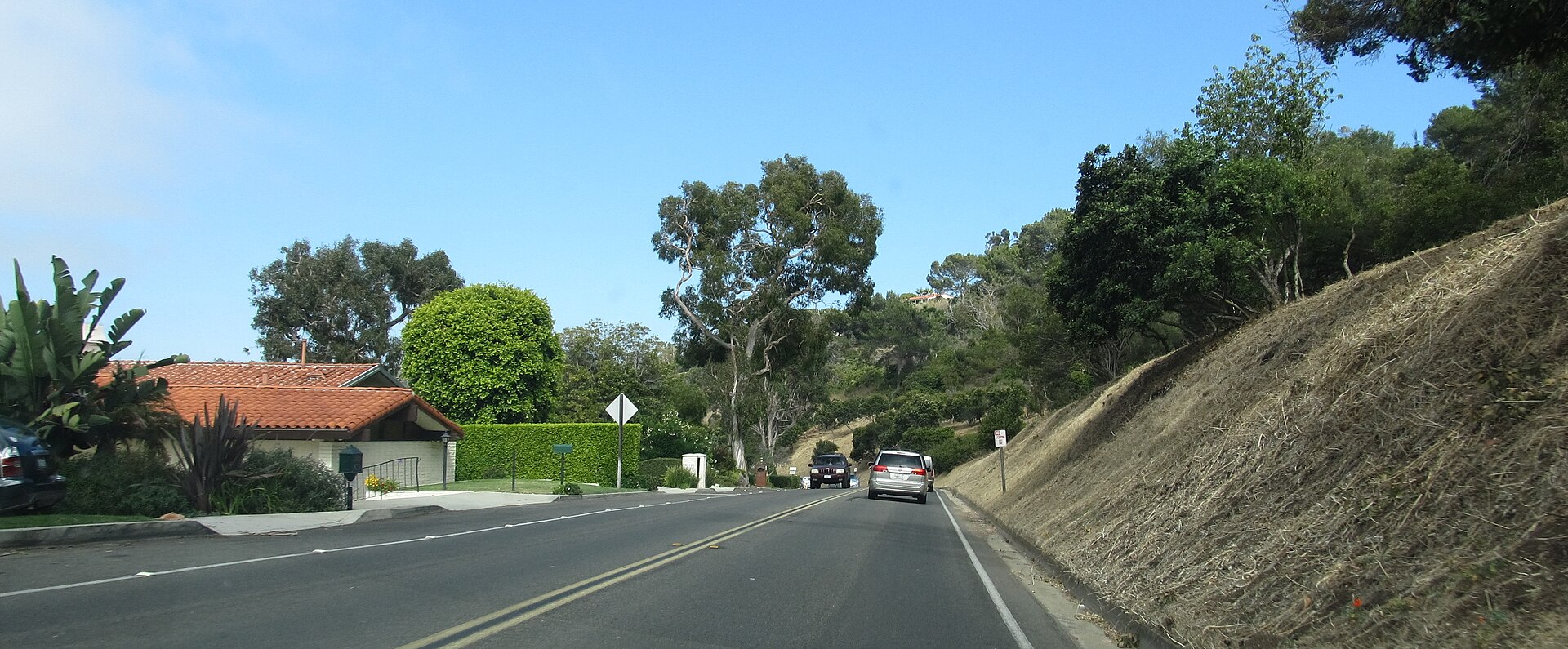
The city that started it all — planned to the last tree by the Olmsted Brothers a century ago, guarded ever since by its Art Jury and its parklands, and still the most complete realization of the California garden-suburb dream anywhere on the coast.
In 1922, before a single house stood here, the Palos Verdes Project laid out everything: where the plazas would rise, which hillsides would stay wild, how deep the setbacks would run, and what colors a roof could be. Frederick Law Olmsted Jr. — son of Central Park's designer — shaped the land plan; architect-planner Charles Cheney wrote protective restrictions so far ahead of their time that cities still study them.
The result is unmistakable a century later: Mediterranean Revival landmarks, eucalyptus-lined parkways, and more than a quarter of the city — some 800 acres — deeded as parkland forever. When the Depression threatened the plan, residents incorporated in 1939 expressly to defend it. The Art Jury has reviewed every exterior design since 1922 and reviews yours next.
PVE is also the only Hill city with its own police department, and its school-and-swim rhythm — Palos Verdes High, the Beach & Athletic Club below the bluff, paddle tennis at the cove — gives it the feel of a small coastal town that happens to sit inside Los Angeles County.
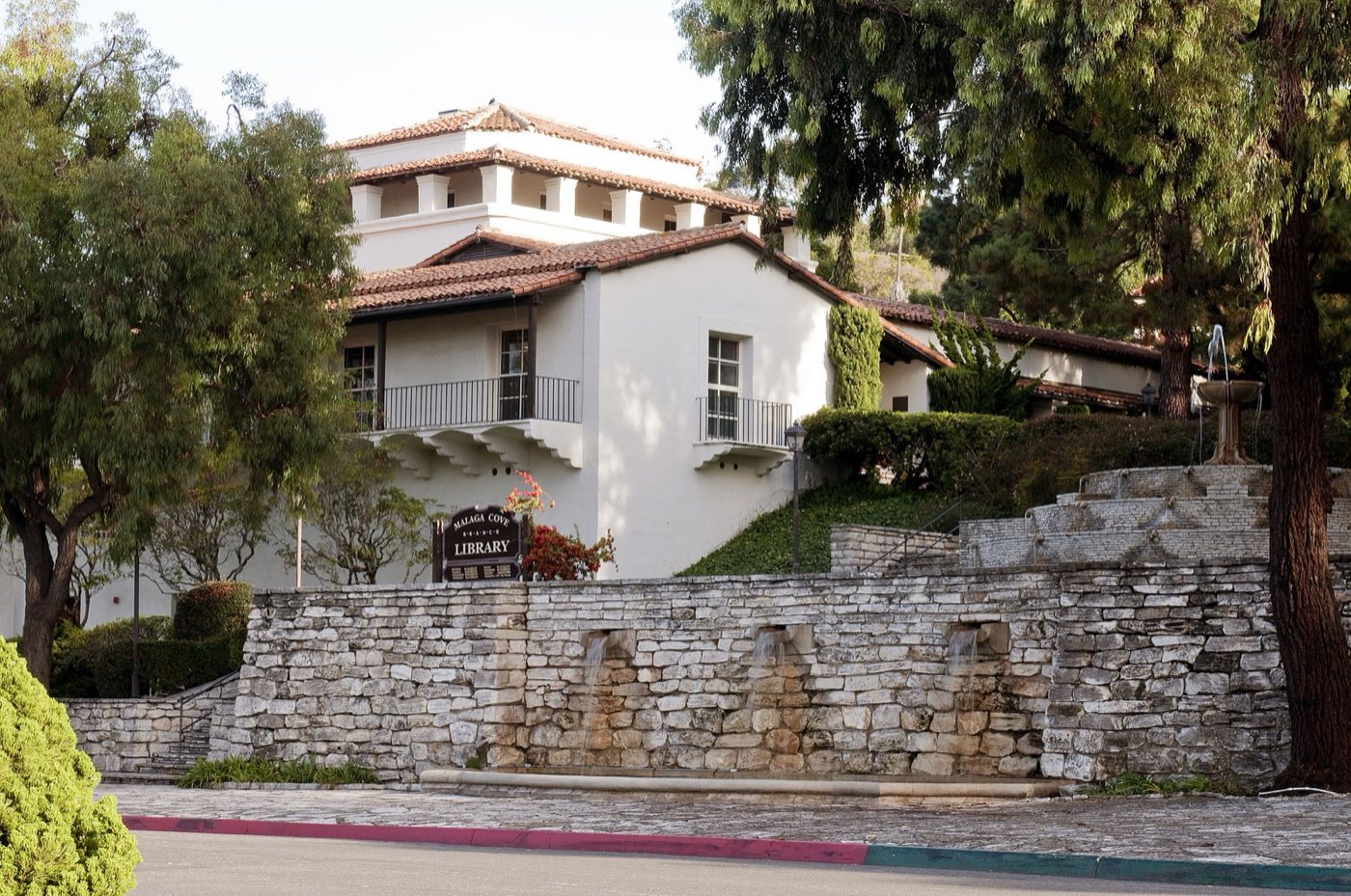
Malaga Cove Library (1930), on the National Register · Palos Verdes Library District, CC BY 2.0
| Incorporated | December 20, 1939 — the Peninsula's first city |
| Population | 13,347 (2020 Census) |
| Land area | ≈ 4.8 square miles; roughly 25% permanent parkland |
| Design review | The Palos Verdes Art Jury, sitting continuously since 1922 — exterior changes require approval |
| City hall | 340 Palos Verdes Drive West · pvestates.org |
| ZIP code | 90274 (Palos Verdes Peninsula) |
| Schools | PVPUSD — Lunada Bay & Montemalaga Elementary, PV Intermediate, Palos Verdes High |
| Police / fire | PVE's own police department (unique on the Hill) · L.A. County Fire |
Nearly every property in PVE is subject to the 1923 protective restrictions and Art Jury review — from paint colors to roof materials to additions. Most residents consider this the price, and the reason, for the city's unmatched consistency. Budget time for design review in any remodel plan.
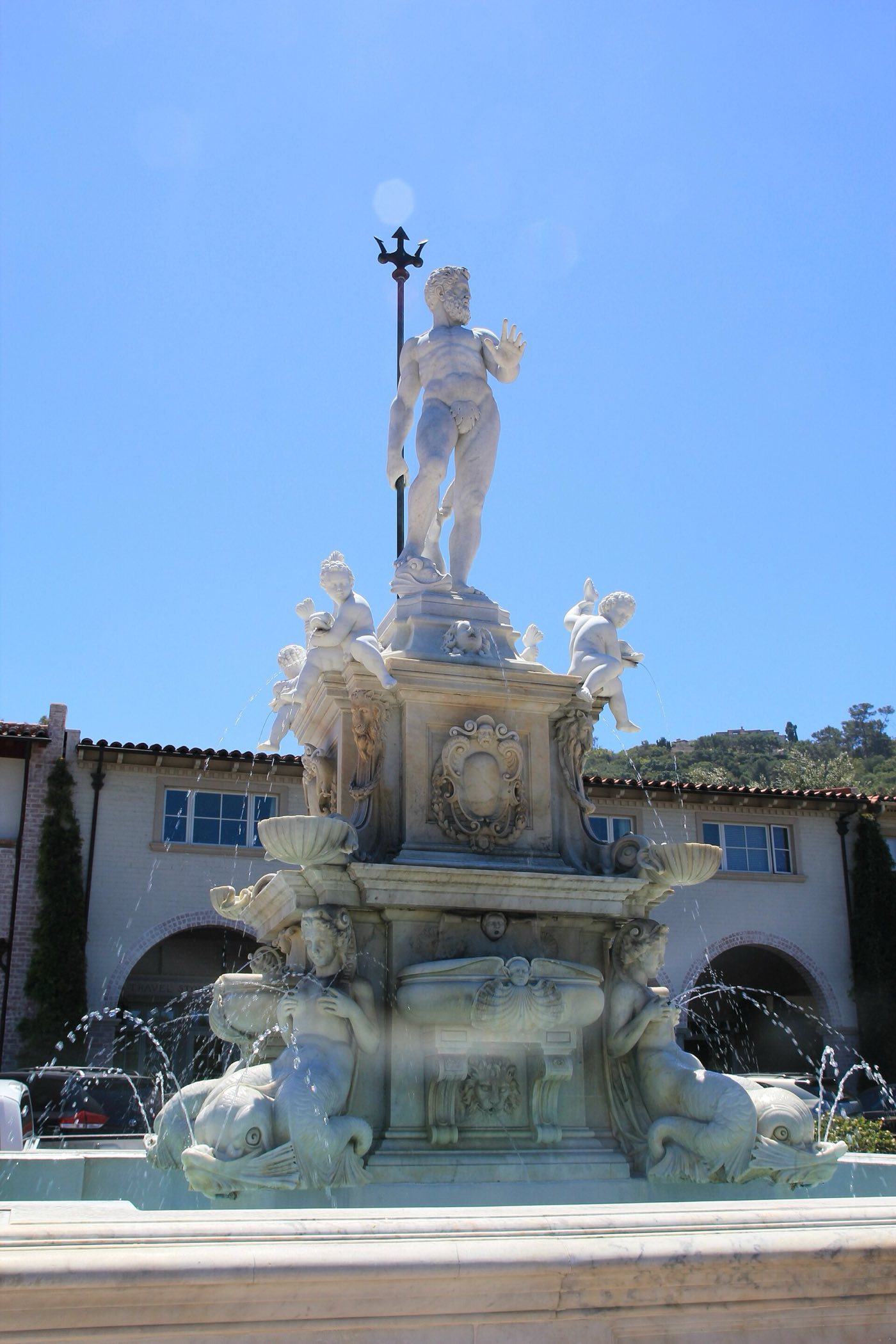
Malaga Cove Plaza and its 1930 Neptune Fountain (a bronze copy of Bologna's) · Malaga Cove Library (1930, National Register) · La Venta Inn (1923, the Hill's first building and still its favorite wedding view) · Palos Verdes Golf Club (1924) · the Beach & Athletic Club at Bluff Cove · the surf lineups of Lunada Bay and Haggerty's.
The four neighborhood names date to the original 1920s Palos Verdes Project maps. Markers are approximate centers, not legal boundaries.
Where the Peninsula begins. The arcaded Malaga Cove Plaza (1925) was the first of four planned village centers and remains the Hill's most beautiful commercial block — bookended by the Neptune Fountain, the Myron Hunt-designed library on its garden knoll, and La Venta Inn on the ridge above. Homes range from original 1920s Mediterranean villas on Via Somonte to bluff-edge contemporaries above Torrance Beach; from the right street you can watch the whole Santa Monica Bay light up at dusk.
Down the switchback lies Malaga Cove itself — "RAT Beach" to generations of local kids — and the paddle-tennis courts and pool of the Palos Verdes Beach & Athletic Club.
The warmest, most tucked-away corner of PVE, spread beneath a canopy of blue-gum eucalyptus planted in the 1880s as a railroad woodlot. Valmonte's lanes feel like a storybook — smaller lots, deep porches, and a horse-country border where the neighborhood meets the Palos Verdes Stables and the golf course. Locals call the microclimate the city's sunniest; the fog often stops at the tree line.
PVE's largest neighborhood curves around its namesake half-moon bay, where winter swells break over the reef made famous — and occasionally infamous — by generations of surfers, and where the bow of the Greek freighter Dominator rusted on the rocks for decades after its 1961 wreck. Above the bluffs: the little Lunada Bay village with its markets and cafés, tree-named lanes of mid-century ranches, and Lunada Bay Elementary. The bluff-top path at sunset is the neighborhood's daily ritual.
The high ground. Montemalaga climbed the hill last — mostly 1950s and '60s single-level ranches on broad lots — and got the payoff: queen's-chair views over the entire bay, from Malibu's ridgeline to the city skyline. Montemalaga Elementary anchors the neighborhood, and the drive down Via Del Monte, through century-old eucalyptus with the ocean filling the windshield, is one of the great commutes in America.
New York banker Frank Vanderlip's syndicate acquires 16,000 acres — nearly the whole Peninsula — sight unseen.
Olmsted Jr. and Charles Cheney unveil the master plan and protective restrictions; the Art Jury convenes for the first time.
The hilltop villa hosts prospective buyers — and becomes the Hill's first landmark.
Malaga Cove Plaza gains its Neptune Fountain; Myron Hunt's library opens on the knoll.
Residents vote to become a city to protect the plan — and the parklands — through the Depression.
Palos Verdes High School brings Sea King football Fridays to Paseo del Mar.
Neptune Fountain, Malaga Cove Plaza · Sgerbic, public domain, via Wikimedia Commons
A sample of current PVE activity — the Real Estate page has the Hill-wide listings, map, medians, and market notes. Every property links to its page at properkey.us. Data powered by Properkey.
PVE trades on pedigree: original Project-era homes with Art Jury provenance, bluff and bay views that cannot be built out, and the Hill's strongest school gravity. Inventory is chronically thin — homes here pass between generations — and pricing between the four neighborhoods follows sun, slope, and surf. Local judgment matters more here than anywhere.
PVE bluffs · Ken Lund, CC BY-SA 2.0 · Real estate content by Properkey, CA DRE #01979718 · Equal Housing Opportunity