Residents of the Peninsula live inside one of Southern California's great outdoor rooms — a nature preserve bigger than Griffith Park's best corners, a coastline of coves and tide pools, four golf courses, and a bridle-trail web that predates the freeways. Here's the resident's tour.
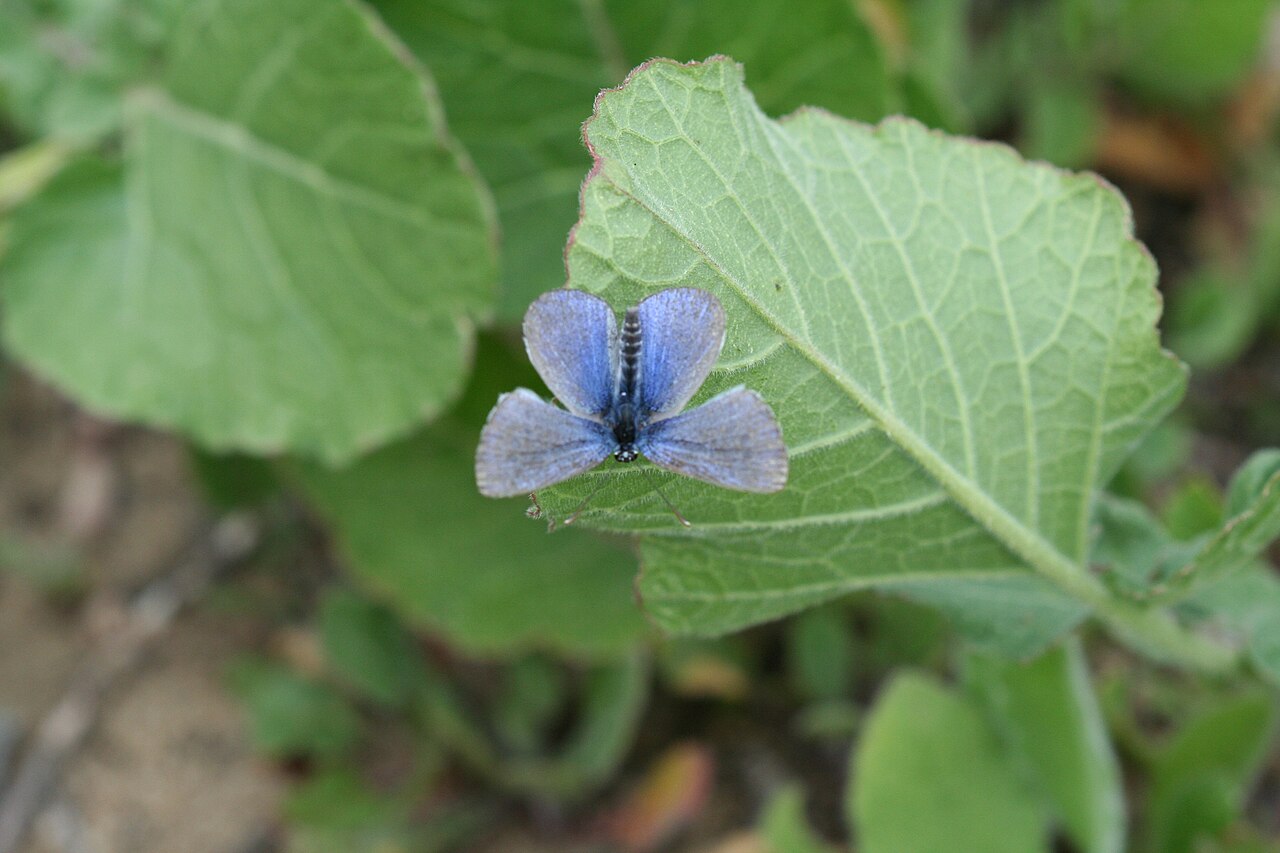
The Palos Verdes Nature Preserve protects about 1,500 acres across eleven reserves in Rancho Palos Verdes, managed with the Palos Verdes Peninsula Land Conservancy — the largest coastal-sage habitat left in the South Bay, home to the threatened California gnatcatcher and the endemic PV blue butterfly, once thought extinct.
Trail rules vary by reserve (dogs, bikes, horses); check pvplc.org before you go, and stay off closed slide-area trails.
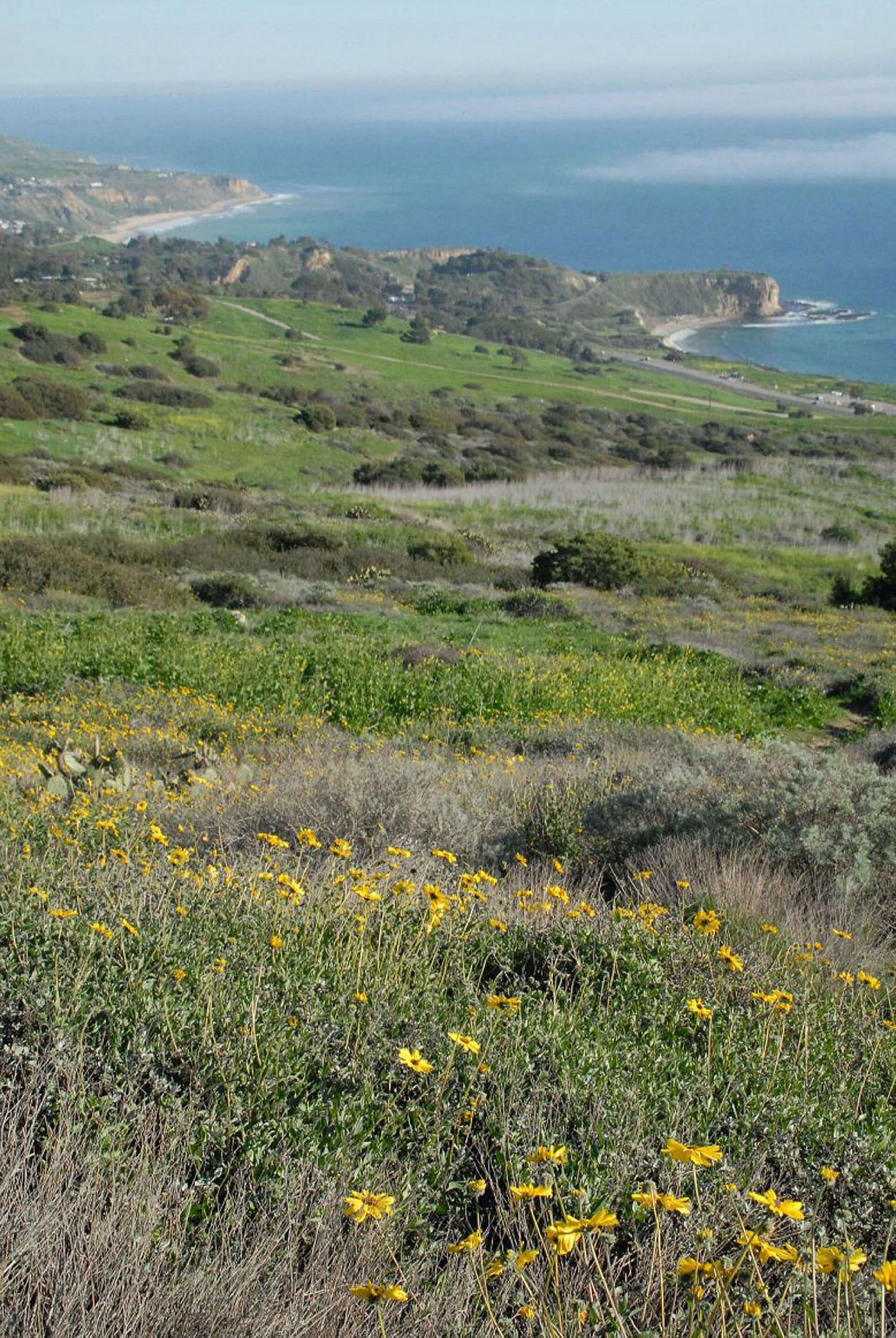
Portuguese Bend Reserve in spring · Williamckenna, public domain — and the Palos Verdes blue itself · USFWS, public domain, via Wikimedia Commons
The Hill's marine playground: an ecological reserve of tide pools at Abalone Cove and Portuguese Point, best at minus tides. Sea hares, octopus, anemones — look, don't take. Parking off PV Drive South; check for slide-related closures.
The gray whale migration passes closer here than almost anywhere on the coast. The American Cetacean Society's volunteer census counts daily from the Interpretive Center bluff — the Hill's favorite excuse to stand outside with binoculars.
Haggerty's and Malaga Cove for winter rights, Bluff Cove's big-wall days, and Lunada Bay — one of California's most storied (and most guarded) big-wave reefs. Paddle out respectful; this is old surf country. RAT Beach below Malaga Cove is the family sand.
The 1924 original, woven into PVE's parklands with canyon carries and bay views — a William P. Bell / George Thomas-era gem.
The county's famous bargain: municipal golf with ocean-cliff holes that private clubs would charge ten times for. Book early; everyone knows.
Public, oceanfront, and dramatic — every hole with Pacific views on the site of the old Ocean Trails, whose 18th famously slid seaward in 1999.
Private, rebuilt this decade by David McLay Kidd over the old Chandler quarry — the Hill's newest golf landscape.
Before the Hill had pavement it had hoofprints, and the network survives: roughly 25 miles of bridle trails in Rolling Hills Estates alone, the entirety of Rolling Hills built around horse-keeping, and Dapplegray Lanes where corrals outnumber garages.
Horse right-of-way is real law here: slow the car, give space, and wave. It's the Hill's oldest traffic rule.
87 acres of gardens, lake, and seasonal spectacles (the winter light walk sells out) grown over reclaimed land since 1961.
Broadway series, concerts, and a youth conservatory — the Peninsula's performing-arts home since 1983.
Galleries, studio classes, and the Hill's visual-arts community since 1931, on Crestridge in RPV.
The Hill's museum of itself — whales, geology, Marineland memories — on the bluff beside the lighthouse.
The 1925 arcaded plaza: morning coffee under the arches, the Neptune Fountain, and the Hill's most photogenic errand-running.
PVE's little main street on PV Drive West — markets, cafés, and after-school pizza runs since the 1950s.
The Hill's practical downtown in RHE: groceries to date nights, plus the library and theater.
RPV's coastal corner center by the lighthouse — the closest espresso to the whale census and sunset dinners on PV Drive West.
The east side's 1920s fountain plaza — small, quiet, and perfectly preserved.
Resort dining, spa days, and the nine-hole Links — locals use it like a second club, especially at sunset.